
Note
This webpage’s content has been adapted for formatting and accessibility. The original report is available at:
Original report prepared for Business Council of Co-operatives and Mutuals (BCCM), October 2023
This report has been funded thanks to the Bunya Fund, Australia’s first co-operative and mutual enterprise sector fund that supports the next generation of co-operative and mutual social enterprises.
The Bunya Fund was launched by the Business Council of Co-operatives and Mutuals with the aim of helping to grow Australia’s co-operative and mutual sector by bridging the funding gap for early- stage enterprises to develop their businesses. It provides funding for education, training, advisory and mentoring to support emerging co-operatives and mutuals with high economic, social, cultural and environmental impact.
The authors of this report acknowledge and pay respect to the past, present and future Traditional Custodians of this nation and the continuation of cultural, spiritual and educational practices of Aboriginal and Torres Strait Islander peoples.
We acknowledge that land and sovereignty were never ceded and the enduring connection of culture, community, land, waters and sky, and pay our respects to their Elders past and present.
The authors express concern about the climate and biodiversity emergency, the impacts we will all experience and the unequal impacts.
We seek to foster a regenerative approach to housing that imagines and develops better built, natural and social environments through collaborative and community-led housing.
This study has found that in the current economic climate a privately funded At Cost Housing Co-operative could deliver:
A replicable model of ‘at cost’ housing for ‘Missing Middle’ households with ongoing housing charges less than current market rental rates.
A stable and long term tenure solution that does not penalise resident income growth over time.
Rent stabilisation with ‘cost rent’ that enables residency charges to become more affordable over time when compared with the private rental market.
A form of collaborative housing that sits between home ownership and private market rental that does not rely on the investment of high amounts of personal equity. Collaborative housing models perform significantly higher in sustainability, community resilience and wellbeing indicators due to citizen participation in governance and community life.
Commercial returns for ground leases to long term land holders (both public and private) which removes the need for significant government subsidies, and provides an alternative pathway for development without the sale of land.
At Cost Housing Co-operatives have the potential to provide a platform for a scalable model of secure tenure housing without ongoing subsidy for ‘missing middle’ households - defined as households who earn too much to qualify for Affordable Housing assistance, but are priced out of ownership in middle and inner ring locations in Australian cities.
At its core, we believe that Australia is in the midst of both an ownership crisis and a rental crisis. Households in major metropolitan centres and regional cities can’t afford to buy their own home close to jobs, public transport and social networks, but renting is increasingly untenable, with limited supply of appropriate long term affordable properties, escalating rents, poor quality housing and lack of tenure security.
Our collaboration and this study aims to address the widening gap between home ownership, the emerging premium build to rent sector, and the Community Housing (CHP) sector. This study is the first step in establishing a values driven organisation to increase the supply of modest submarket, secure tenure accommodation and create downward pressure on the relatively unregulated private rental market to better service ‘Missing Middle’ households.
The ‘Missing Middle’ housing co-op model allows members to secure housing within the co-op by purchasing a share of the co-op via an initial upfront Membership Fee. It is in effect, a co-ownership model. This upfront fee represents ownership of a share in the co-op, which gives the member a vote on the housing co-op management committee and an associated right to reside in the co-op property. The housing co-op owns the building and is responsible for maintaining the building and covering its operating and capital expenses.
Members also pay a ‘Residency Charge’, a monthly fee that covers the ongoing operating and capital expenses of the co-operative. This structure gives members agency and self-determination over how the building is managed and how the operating entity manages its income and expenses.
Facilitating the settings that enable the co-operative housing sector would prioritise community over profit, enabling residents to have greater agency over their health and wellbeing, and in turn reducing the burden on the public sector in the long term.
Adapting international approaches to co-operative housing on a combination of government, faith based, business and privately-owned land in the Australian context would create more diverse and affordable housing supply and provide a long term, secure tenure housing option for Australians locked out of home ownership.
In Zurich, 20 percent of all housing is delivered and managed by housing co-operatives, creating a ‘third way’ between unaffordable market rental and scarce social housing. This sector underpins tenure security, allows for a greater range of career and life choices, and redirects resident investment into higher productivity and entrepreneurial sectors of the economy outside of housing. This broader range of housing options has proven crucial to attract and retain talent, support a diverse labour force and enhance the competitiveness of urban areas (Goulding, 2018).
In Manhattan, where 74% of apartments are co-operatives (DW Gibson, 2022), many housing co-operative members are owners, not renters. Part of the positive narrative about the sector is the benefit of converting people to ‘owners’ - with more security comes greater place attachment and more contribution to the neighbourhood. Members jointly own the co-op, and the building is run ‘at cost’ and those costs are distributed across members, using a formula, usually based on a number of bedrooms, or floor size, or a combination of both.
Co-operative housing has also proven to be a highly effective activator of space, increasing the dynamism of neighbourhoods, as well as offering an alternative, more equitable instrument of regeneration whilst protecting against the displacement effects of urban gentrification (Choi et al., 2018; Engelsman, Rowe, and Southern, 2018).
The Opportunity
Adaptation of an existing housing model centred on resident agency into a new class of collective ownership for ‘generation rent’
A new non-profit model of secure tenure housing that better meets the needs of ‘Missing Middle’ households than the dominant premium build-to-rent offerings in the Australian context.
A new form of collaborative and community-led housing that does not depend on significant resident equity or Government subsidy.
Self-sustaining cost of housing for residents that grows more affordable over time
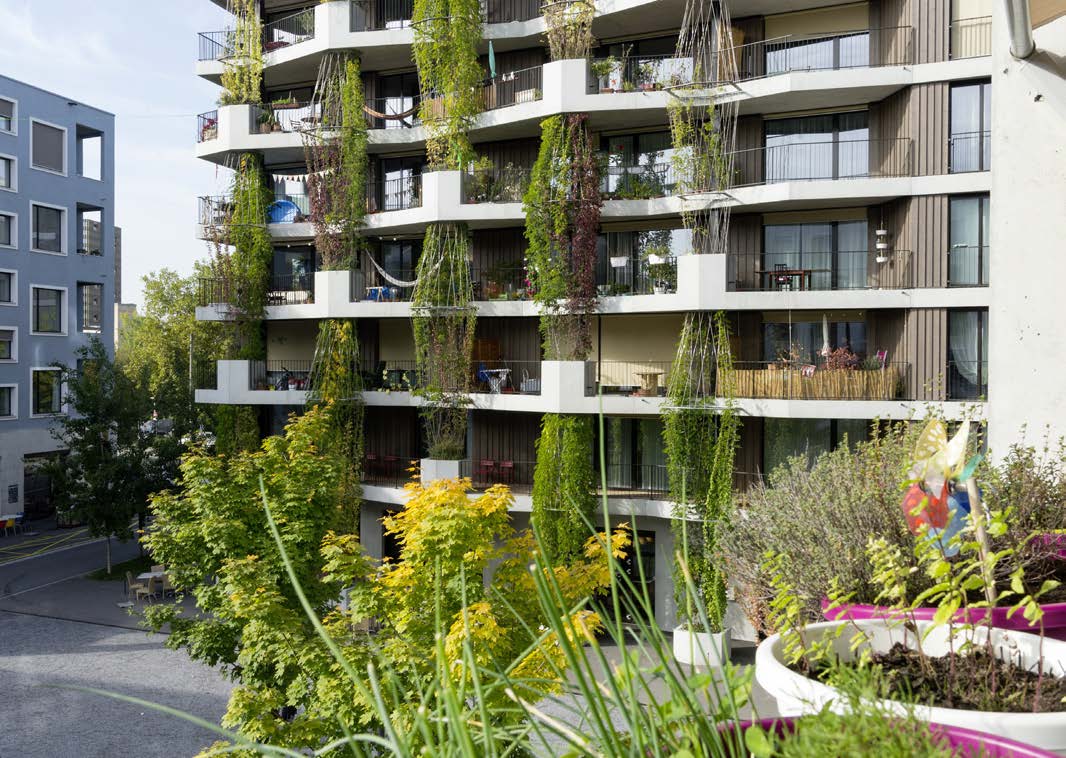
Mehr Als Wohnen, Hunziker Areal Zurich, photo Johannes Marburg 2016
The interest in co-operative housing models, offering good quality and secure tenure housing, is steadily growing across urban and regional areas in Australia as ownership becomes more and more difficult to obtain. Interest has been expressed in co-operative housing in such diverse places as Melbourne, Sydney, Canberra, Cairns, Margaret River, Byron Bay, Hobart, Victoria’s Surf Coast, Yackandandah, Stawell and Eden.
What is now required as a matter of priority is the delivery of a modest pilot demonstration project for a community of between 30-50 homes in scale. To do this we seek:
Landowners who are values-aligned and open to a long term commercial ground lease arrangement.
Impact investors prepared to invest for the long term and fund the development and investment phases.
Debt funders willing to offer low margin long term investment phase debt to allow commercial ground leases to be paid for securing the land.
Member and employee focused organisations and businesses looking to invest in creative ways to deliver more affordable and secure housing for their members and employees.
Creating a ‘Third Way’ or ‘Middle Ground’
Workers and locals that are the lifeblood of our cities are increasingly being priced out.
Our current rental housing system is broken.
Imagine if renting was more than a Plan B.
Imagine if renting was a form of ownership and promoted strong communities.
92% of renters aspire to own their home HIA Survey, March 2019
78% of renters think ownership is unattainable
50% of young people are unlikely to own their own home Terry Burke, ABC Interview, October 2019
Two-thirds of renters in the City of Sydney on moderate incomes are experiencing housing stress
Yet the benefits of providing targeted affordable housing to the broader community and economy are well understood
Through engagement with government, non profit and private sector development companies, it has become increasingly clear that the majority of the housing sector is focused at two ends of the equation. Private developers are geared to target the maximum possible price within a competitive market while government attention is focused on housing of the most vulnerable.
What is being neglected is the significant opportunity to provide housing for the ‘middle’ and the effects this could have across the full spectrum of the housing market. The provision of a significant volume of moderately priced housing that does not require government subsidy would provide both a step up for residents ready to leave the regulated affordable housing sector, while creating downward pressure on prices within the unregulated private rental market.
‘Affordable Housing’ is often used by different stakeholders to mean different things. This report applies the definition used within Victorian and NSW planning legislation. Broadly, this definition requires housing to be appropriate to the household and cost no more than 30% of household income, for the lowest 3 income quintiles - categorised as Moderate, Low or Very Low Income households. Income limits for these households are updated annually. Dwellings with housing costs higher than 30% of these income limits do not meet the definition of ‘Affordable Housing’.
Build to Rent
15% above market rent

Missing Middle Housing Co-operative
10% below market rent
*Refer Appendix 3
Affordable Housing
25% below market rent
Social Housing
A critical element of any affordable housing system is how the ‘rent gap’ is addressed, which is the value differential between the cost of constructing and operating a residential building, and the rent paying capacity of social and affordable tenants. The rent gap is particularly prominent in very low and low income earners, where the income earning potential of tenants is very limited, and social risks are most highly concentrated. The only method of increasing the supply and quality of this critical sector is longitudinal capital subsidies, and after-housing rent assistance such as Commonwealth Rent Assistance.
With the significant increase in development costs that has recently occurred, opportunities for moderate income households to cover the costs of construction and operation of a residential building without subsidy have become significantly more constrained. Increasingly, this cohort would require some level of assistance to close the ‘rent gap’. In an outer suburban or rural context, moderate incomes might be sufficient to find appropriate and affordable housing options. However it is increasingly impossible to do so within more centrally located, urban neighbourhoods and in many regional contexts. AHURI data shows an increasing trend of moderate income households moving out of these locations.
It’s important to note that this cohort includes key and essential workers - employees in services that are essential to a city’s functioning but who earn low to moderate incomes, and work roles that require them to be physically present at a work site rather than being able to work from home. Without an effective subsidy being available, this cohort is likely to continue moving away from city and regional centre locations, with negative effects for those economies.
Increased development costs in middle and inner locations has also created a ‘Missing Middle’ cohort - a group of households who are not eligible for affordable housing assistance, but are also priced out of local home ownership markets. The current structure of Australian housing markets means that these workers are faced with a choice of living in poorer quality, insecure tenure rental housing, premium priced ‘Build-To-Rent’ (BTR) offerings or moving to outer suburbs to purchase a home.
This ‘Missing Middle’ cohort presents a significant opportunity to develop a housing offer that meets their needs as, in most urban areas, the rent paying potential of tenants is sufficient in order to cover the cost of construction and operation of a residential building.
Cohousing is a community-led approach to housing that prioritises resident participation in design, preferencing smaller private spaces and generous shared spaces. Projects are collaboratively designed and governed to encourage connection and resilience.
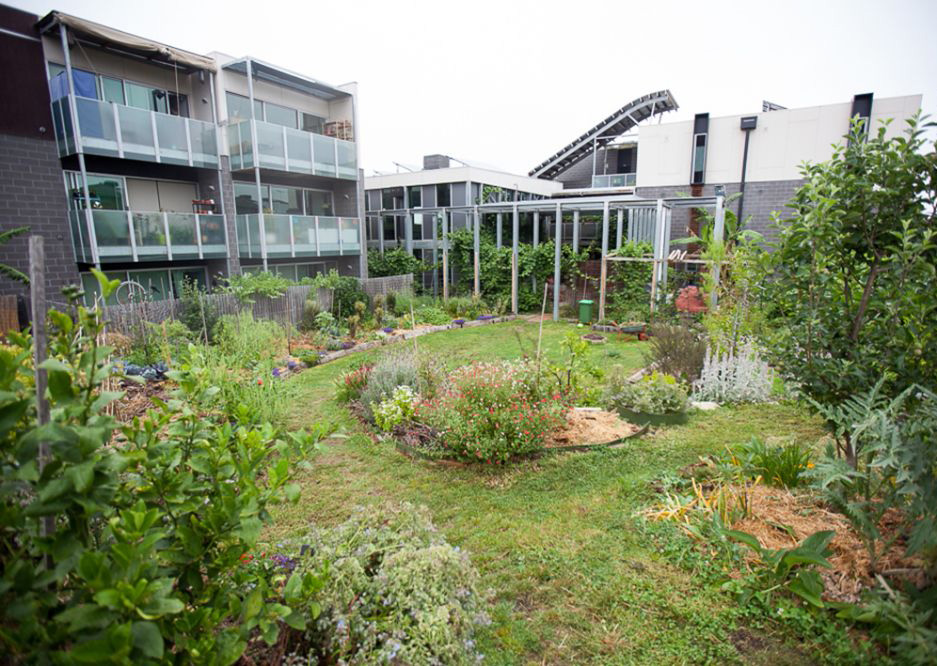
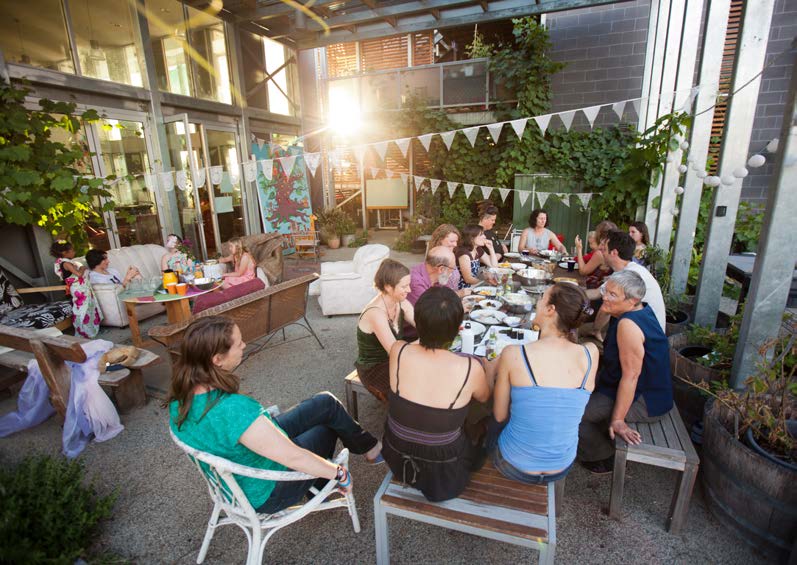
Murundaka Cohousing Community - an intentional community located in Heidelberg Heights, Melbourne. The co-operative is administered by Common Equity Housing Limited (CEHL) a registered Community Housing Organisation.
Affordable housing in Australia is largely provided through the social housing system, made up of both public housing and the community housing sector. The original community housing program supported tenant involvement in housing management and at this time housing co-operatives were a separately funded stream of community housing. This led to the rental housing co-operative sector that exists in Australia today.
Co-operative Community Housing Organisations (CHOs) successfully support rental housing cooperatives around Australia. A member’s income determines their eligibility to join the co-op and the rent that is set (generally 25% of income). Co-op members make up a broad and diverse community who have agency in the operation of their housing co-operative and their living environment. They rent like they own.
The Australian Co-operative Housing Alliance (ACHA) is a peak body for the registered CHOs delivering rental co-operative housing and offers support to the broader co-operative housing sector.
A significant and growing proportion of the community cannot afford to buy their own home, do not meet the income thresholds to be eligible for social housing, but still require support to access stable tenure rental housing.
There is an acute need for a new type of housing player in the modest profit or not for profit space that can provide for moderate income earners and ‘Missing Middle’ households, which also enables community involvement in the design, development and operation of the housing.
It is in this environment that limited equity housing cooperatives represent an exciting potential model, drawing upon lessons from the well-established sectors in continental Europe and North America.

Public infrastructure (tram depot) with air rights ground lease, Kalkbreite, Zurich
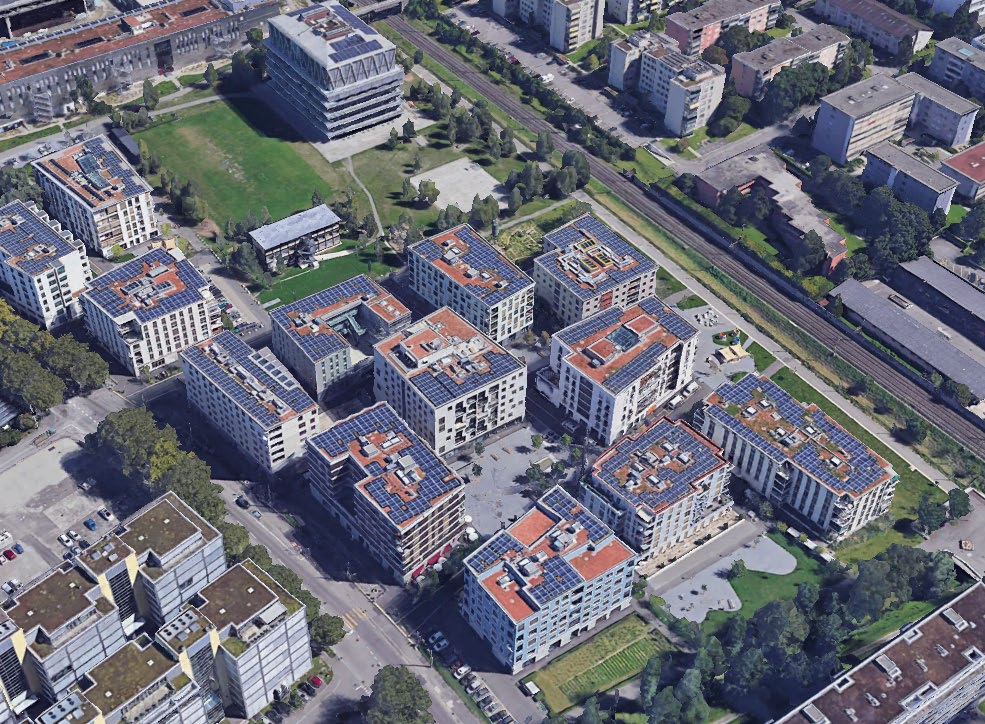
Neighbourhood scale transformation on public land, Mehr Als Wohnen, Zurich

Private land acquisition and existing building retrofit co-operative, Wogeno, Zurich
Opportunities for community participation, community wealth building, as well as provision of economic opportunity through a mix of uses and paid roles within the community can provide immense community benefits.
How can we learn from these international models, while building a system from the ground up that responds to the specific financial, cultural and regulatory context of Australia?
Zürich is a society where traditional ownership is not a cultural expectation. The success of the city’s co-operative movement has been shaped by a combination of community-led initiatives, popular support, and favourable government policy. But co-operatives have also benefited from system-wide approaches to regulating rental housing and the financial infrastructure available to provide low-interest loans.
While the model can remove existing properties from the speculative market, co-operatives in Zurich continue to benefit from ‘right of use’ access to public land for new projects, supported by active municipal housing policies aligned with popular mandates (30 percent of co-operative housing is on city-owned plots). This includes a form of value capture on redeveloped brownfield sites—where the city acquires parcels as a ‘tax’ on rezoning and on-leases them to co-operatives—and in-fill strategies on underutilised land like parking lots.
Zurich co-operatives enjoy access to a supportive financial ecosystem with a range of preferential instruments that reduce overall development costs (and hence rents), assist with ‘start-up’ capital and bridging finance, and provide mortgage guarantees that lower equity requirements. These include a federal ‘Revolving Fund’ extending low interest loans for land acquisition, a ‘Solidarity Fund’ managed by the national co-operative umbrella organisation, and low-interest financing from the pension fund of the City of Zurich and a dedicated bond-issuing institution backed by the national government. The municipality also purchases share capital in individual co-operatives.
The strong protections embedded in co-operative projects reflect Zurich’s emphasis on supporting long-term tenure. Tenancies are usually open-ended, and can only be broken by landlords on narrowly prescribed grounds. Rents are moderated by ‘second generation’ controls that apply to all units, with the onus on landlords to justify increases due to higher costs or renovations. Co-operatives introduce additional mobility into this system by allowing individuals or families to change apartments without sacrificing the benefits of a length-of-tenure discount.
The legal framework for co-operatives is outlined in the Civil Code and supported by Federal Housing Office regulations and a constitutional right to housing. With a 100-year history, the model is a long-established part of the housing system and administrative barriers to entry are relatively low. Meanwhile, broad community awareness and support means co-operatives can access a pool of member capital far in advance of site acquisition and planning approval (and without expectations that membership will necessarily lead to residence in a realised project). Projects like Mehr Als Wohnen and Kalkbreite dispel the myth of co-operatives as a fringe phenomenon and demonstrate the ability to deliver large volumes of exceptional quality, perpetually affordable housing.
While the Zurich co-operative housing sector has been around since the early 20th century, there has been a recent renaissance in the model since the 1990s, with a new generation reinventing the traditional residential dormitory co-operative in the suburbs in favour of higher density, mixed use urban neighbourhoods with a significant quantity of active retail, commercial and communal space.
This tendency has been supported specifically by the City of Zurich who have allowed co-operatives to redevelopment to a higher height control on the condition that they undertake a design competition. This incentive has resulted in a significant increase in the standard of co-operative housing development and parallels the successes of the City of Sydney Design Excellence program, now deployed throughout New South Wales.
In 2019, The City of Sydney commissioned the Alternative Housing Ideas Competition with a view to finding innovative solutions to the housing crisis, with a particular focus on ideas outside of the regulated, subsidised environment that limits the expansion of social and affordable housing.
The key reasons for the competition were to address the following challenges:
Seven winners were selected by an expert jury which addressed technology, design, financial and organisational innovation. These were then workshopped over a period of 4 months to test and develop these ideas.
The Third Way Housing submission aimed to articulate a vision for a prototype model of rental co-operative which drew upon the successes of the Zurich co-operative housing sector while being tailored to the specific legal, cultural and financial circumstances of the Australian context.
The Third Way model, was supported by the City of Sydney for its ability to address the shortage of housing for key workers and moderate income earners without the need for capital investment from government. Further, the model demonstrated a way to meet a range of social, environmental and economic objectives for the city without losing control of public land. This was to be facilitated through a long term, commercial ground lease.
Through the Sustainable Sydney 2050 Strategy the City of Sydney aims to offer a wide range of housing options at a range of different price points, catering for the community at all stages of their life with affordable choices for families, intergenerational households, older people, students, single person and co-living households. We see co-operative rental housing to add an important missing element within the spectrum of housing options available to our diverse community.
More specifically, the City of Sydney through the Housing for All program are continuing to explore opportunities to enable a prototype with a ground-lease over City of Sydney land, which could enable a prototype such as moderate-income co-operative rental housing, while retaining public land in public hands.
The City of Sydney continues to explore the setting aside of a series of underutilised public land holdings to prototype housing models that can generate affordability without dependence on the State or Federal Government investment.
For the updated 2023 study we adopted the key commercial structure and financial assumptions used in the Third Way 2019 submission. This became our base case scenario to review to review. Refer to Appendix 3 for key proportions, metrics and assumptions.
The key financial impact from the 2019 modelling indicated that with no capital investment from government, a 30% discount to market rent could be achieved in its first year of operation. The 2023 review indicates this is no longer possible.
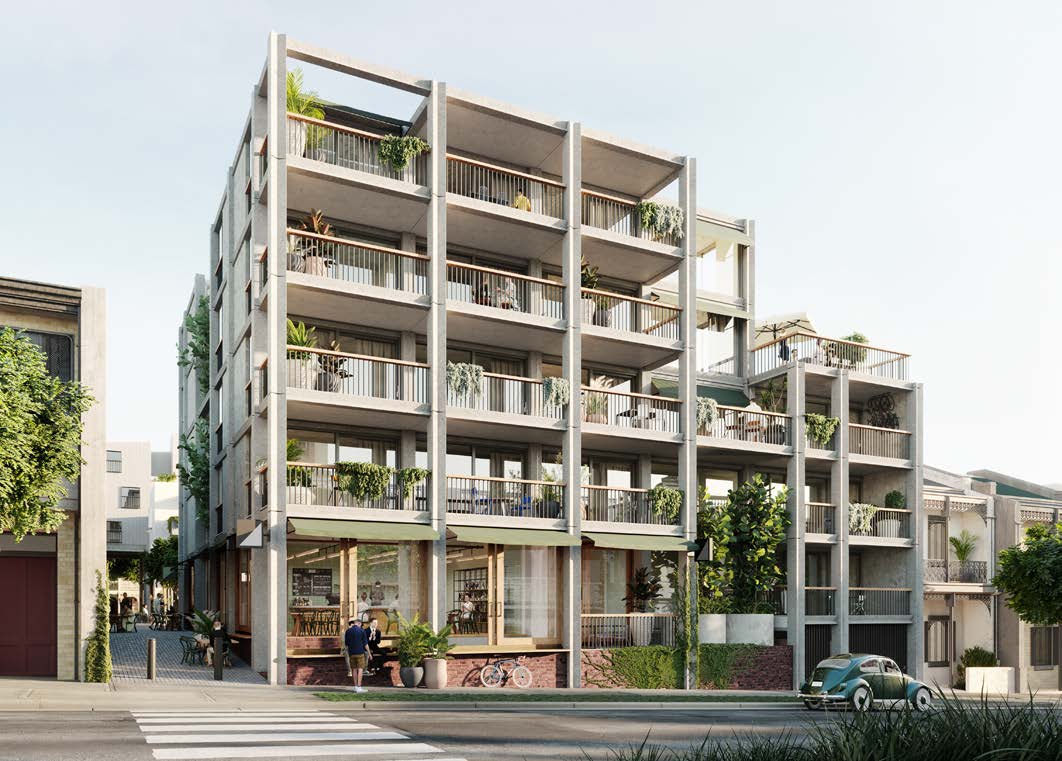
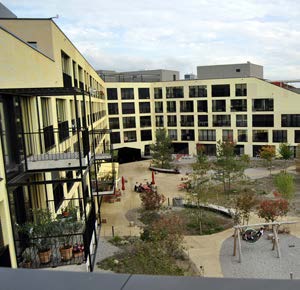
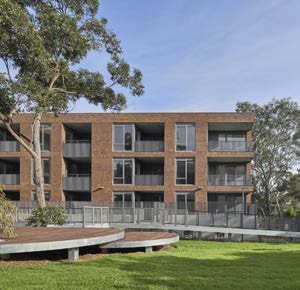
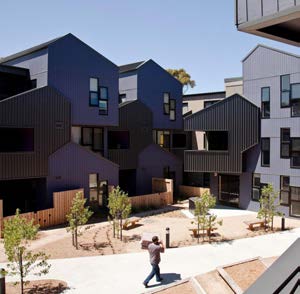
Exterior street view of built proposal

View of internal shared open space
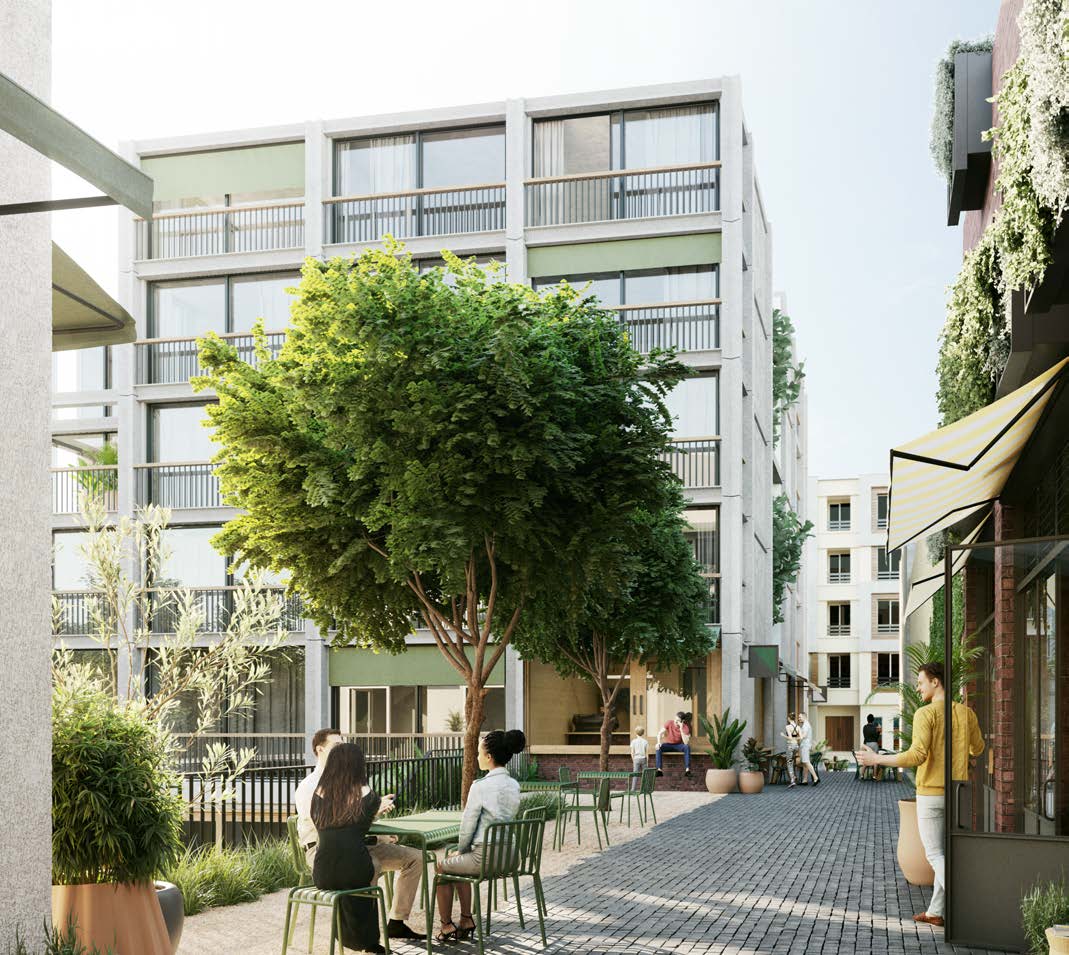
View of laneway and public space
In reviewing the financials of the 2019 modelling and proposition, our key areas of focus were updating the following in line with 2023 market realities:
We adopted a ‘debt finance’ first approach focusing primarily on prevailing debt market metrics and engaged with Bank Australia and debt advisors Hyaline Finance for guidance. Our approach was to re-run the economics of the 2019 modelling and determine whether the operating entity would be in a position to pay off its equity and debt liabilities within a ‘reasonable’ time-frame and to this end adopted a 30 year investment phase target.
Secondly, we looked to ensure that the equity investor would receive a ‘commercial’ rate of return for their investment and targeted a 10% Internal Rate of Return target. We determined that investing Co-op member equity funds during the development phase was not commercially appropriate and assumed that all equity invested during this phase was via sophisticated and/or institutional impact investors. Co-op members equity was contributed at the commencement of the investment phase post completion of the build.
Finally, we sought to structure the commercials so that the operating entity would not be reliant on subsidies to be commercially viable. To this end, we assumed that the Co-op, while it could enjoy Not For Profit status, would not receive tax benefits from being a registered charity.
To illustrate the levers and changes over time we created two different financial scenarios:
Baseline (Scenario A)
Monthly residence charge commences at a full market rent level and is capped at 2% escalation per annum
Alternative (Scenario B)
Monthly residence charge commences at 90% of the market rent level and is indexed at 2% escalation per annum plus investment phase debt is financed by the National Housing Finance Investment Corporation (NHFIC), now Housing Australia.
Appendix 2 outlines the key assumptions and outcomes from the updated modelling on these scenarios.
In summary, the modelling indicated:
Total Development Cost (TDC)
The forecast TDC of the project increased by between $3-4m from ~$29m in 2019 to ~$33m-$34m in 2023.
Debt
The forecast amount of debt required to deliver the development increased by ~$3m in Scenario A and ~$1m in Scenario B. This was informed by funder guidance on minimum Debt Service Ratios (DSR) and Interest Coverage Ratios (ICR)
Equity
The forecast amount of institutional equity investment increased by ~$3m in Scenario A and ~$5.5m in Scenario B.
In both scenarios the Co-op was able to provide the equity investor an IRR of ~9% per annum or greater.
Ground Lease
Under Scenario A, the Co-op would not be able to afford to pay anything for the ground lease. So it would need to secure the ground lease on a peppercorn rental basis.
Under Scenario B, the Co-op would be able to afford a commercial ground lease for the land. It goes without saying that an inability to pay anything for access to land will severely curtail the ability of the Co-op to secure land in Scenario A. Scenario B presents a much more viable pathway.
Time
The ability of the Co-op to pay off its debt and equity investor liabilities within a 30 year period was achieved in Scenario A (where debt was repaid in Year 30 of investment phase and Equity was repaid in Year 22 of the investment phase.
However in Scenario B the impact of paying a commercial rate for the ground lease pushed the equity investor payback to Year 25 of the investment phase and debt in Year 30 remained at an Loan to Value Ratio of ~26%.
The modelling assumes a liquidity event in Year 30 on an assumed capitalisation rate. However, we also assume that the initial ground lease term would be in the vicinity of 50 to 60 years, and the best outcome for the Co-op would be to renegotiate the length of the ground lease between 5-10 years prior to the end of the initial term.
Income
Co-op member income comes into the project in two ways:
A membership fee - an average of $38k in Scenario A and $47k in Scenario B.
A monthly residency charge - starting at an equivalent to market rent in Scenario A, and starting at a 10% discount to market rent in Scenario B (both with capped escalation at 2% p.a.).
The at cost nature of managing the Co-operative’s revenue and expenses indicate that once the equity and debt investors are paid down or out, there exists additional ‘headroom’ revenue that the Co-operative is generating from member monthly residence charges.
This surplus income could be used for a number of purposes, for example:
to reduce the ongoing monthly residence charges for members for the remainder of the ground lease term. Further increasing the delta between market rents and the cost of living in the co-op. For Scenario A this would occur between Years 25 to 30 of the investment phase. For Scenario B this would occur around Year 30. For context, an average $47,000 membership fee is analogous to a 4.9% ‘deposit’ on the median apartment price of $952,000 for Redfern as at September 2023 according to realestate.com.au
to pay a return on resident equity
to reimburse resident equity at the end of the lease term
to offer subsidised rent to specific member cohorts
to support development of other at cost housing co-operatives
It is important to note, that to make the project economics ‘commercial’ the solution proposed, is not an affordable housing solution by any statutory definition of affordable. Rather, this model offers housing that is affordable to ‘missing middle’ households with moderate incomes around $120,000 - $150,000 pa.
Appendix 2 shows a comparison of current NSW Quintile 3 moderate income households and the 2023 feasibility study assumed rents (as at July 2023).
As you can see, Scenario B gets close to meeting the 30% of household income threshold. Under Scenario B, where the residency charge commences at a 10% discount to market rents and increase yearly at a capped rate of 2%, it takes 11 years for the residency charge to be 25% less than market rent, assuming average annual rent escalation of 3.5%.
It’s important to remember though, while these numbers don’t meet the 30% of household income target in the immediate short term, over the medium to long term, the structure of the at cost housing co-operative will significantly reduce the cost of housing for its members versus the prevailing market rent for comparable accommodation.
Scenario A - Baseline (Full Market Rent with 2% capped escalation and commercial debt)
Scenario B - Alternative (10% discount to market rent with 2% capped escalation and NHFIC debt)
Challenges for a new generation of Housing Co-operatives:
The outcome of our 2023 review of the ‘at cost’ housing co-operative, based on the financial market assumptions made and indicative location, is that there is a viable pathway to realise this project.
Each option has it’s own challenges, whether Scenario A which requires a peppercorn ground lease or Scenario B that requires access to cheaper debt to enable a commercial lease.
Critically, both scenarios also assume that an impact equity investor could be identified to support the Co-op by investing equity at a near 10% IRR p.a. over 34 years.
The evolution of thinking around commercial structure and governance is a critical component of developing this model if it is to become scalable. How the model is developed to de-risk it from a capital investment perspective will be particularly critical.
Regardless of the financial feasibility of the project, equity and debt investors will need to understand and be comfortable with the directors of the project entities, what the directors’ experience is in development and operations, what guarantees are being provided, what is the balance sheet position of the entity and ultimately who is the sponsor.
We have assumed the commercial structure for this case study includes the following features:
Operational Company (Op Co - The Co-op)
Established with the same amount of members as units eg. 44
Each member has a vote on the management committee. All decisions are made via the management committee.
Members equity is contributed into this entity and members do not guarantee any debt. Borrows from Debt funder to pay out the construction loan and debts of the Development Company (Dev Co) at completion of the build.
Enters into market lease agreements with commercial tenants
Annual reviews of monthly Residency Charge
Annual valuations conducted on rental to underpin/set ongoing Residency Charge for members and facilitate entry and exit of members.
Members have a say on incoming member selection
Land Company (Land Co)
Controlled via the landowner who grants the Op Co a ground lease. So ownership is not transferred.
The land owner provides security rights to the Debt funder for construction finance and appoints a Development Company (Dev Co) via a Development Management Agreement (DMA) or similar to deliver the building to the Op Co.
Development Company (Dev Co)
The land owner in this context becomes critical as they remain project partners in the long term. The land owner is critical not only because they provide long term access to their land for the housing co-op over time, but must be willing to assist to de-risk the project from a debt perspective during the development phase by providing assignable and unencumbered security to the land to the debt funder as part of the ground lease arrangement.
Without this, the housing co-op will need to source a significantly higher amount of equity capital to prosecute the project. Without access to the security of the land for mortgage purposes, the debt investor either will not invest or significantly reduce the amount they will lend against the project to reflect the risk of not having a secured position.
Likely sources for land access include state and local government and faith-based organisations. In some locations, major local employers may also have suitable land and be interested in generating housing options for local workers. To underpin project viability, the Ground lease term required will be at least 30 years, and ideally longer.
Ground leases are currently relatively rare in Australia for residential development, and usually used to enable use of land owned by a public entity for a peppercorn rent. Typical term approaches include issuing 30, 50 or 99 year leases or leases in perpetuity. Organisations also have the option of extending or renewing a lease term.
In Victoria, the Local Government Act limits the lease term Council’s can offer to a maximum of 50 years, so Victorian Councils would need to transfer the land to another entity if they intended to offer a longer lease or enable a lease renewal past 50 years. There’s no legal restriction on lease terms for other organisations, and indeed examples exist locally within the Victorian context for faith based and private land leases exceeding 50 years, including some Build to Rent providers using 60 year leases on both faith based and private land holdings. The key determinant of this lease period is a building management perspective of major items for renewal, including building fabric such as lifts and mechanical systems. A 50-60 year time horizon accounts for a major renewal event in year 25-30, and a second life for the asset.
Establishing a ground lease rather than purchasing land means that consideration of available options for a terminating ground lease is required. Options will be dependent on the original length of ground lease and whether there is ability to renew the lease. At the end of the lease the presumption is typically that the constructed asset would revert to the ownership of the land owner, although often a first right of refusal is employed to give the lessee the right to continue to operate the asset. In the Australian context of commercial leasing, the latter is very rare, with the exception of Alpine Areas (crown land leases) and within the ACT. A key focus will be the upkeep or state of the asset at this lease end, ensuring the landowner is not burdened with an asset that requires significant investment.
Terminating ground lease considerations:
Options to renew or extend, ensuring clear timelines for decision making about renewal to inform Residency Charge setting and enable management of residency rights.
Treatment of capital improvements on the land - will they be removed or handed over to the land owner?
Treatment of resident equity - is equity reimbursed and , if so, will any escalation be applied. Inability to reimburse member equity at the end of a ground lease term may be a significant disincentive for prospective co-op members.
Like most innovative or affordable housing models, community-led housing benefits greatly from preferential access to land. Local or state government can enable these models by preferencing community-led housing when they are looking to provide land for sale or long-term ground lease.
Community-led housing projects benefit from Expression of Interest processes that privilege projects that provide affordability, sustainability or community benefits.
While discounted land would enable community-led housing to provide greater levels of affordability for its residents, community-led housing proponents can often pay commercial terms for land purchase or ground lease.
Community-led housing projects benefit greatly from access to ground leases or deferred settlement on the purchase of land. Long-term ground lease enables government to maintain revenue over time and retain ownership of the land with significant intergenerational equity benefits.
Preferential access to land could also be provided for sale or ground lease (at a subsidised or commercial rate) by government or private master developers as part of an urban renewal precinct, with community-led housing acting as an important catalyst site that brings life to a new neighbourhood. This method, used extensively in the Netherlands and Germany can bring forward precinct development and increase the attractiveness and value of remaining development parcels.
It is reccommended that community-led housing is preferenced through Expression of Interest processes when governments are providing land for sale or long-term ground lease.
The financial capacity and capability of project sponsor looms as potentially the key factor that will be the determinant of whether this proposition evolves with scale or not. With no liquidity event to pay down debt, gearing during the development and investment phase will depend on the financial strength, capability and experience of the project sponsor. If it is a new entity it will have no experience and track record so the character, capacity and capability of the development and operational team behind the structure become even more important.
On the equity capital site, it remains to be seen whether a ~10% IRR per annum for 34 years is an attractive enough return for equity investor’s to support this proposition.
Moreover, the actual equity investment instrument would need careful structuring in conjunction with the debt investor. If the returns to the equity investor are structured to look like a debt instrument (i.e. a guaranteed coupon) then it is most likely that the cost of this equity capital funding will be included in the banks debt gearing calculations and will significantly reduce the amount of bank debt the bank lends. Potentially to the point where the proposition becomes unviable.
Scenario B illustrates the impact of cheaper debt on during the investment phase. Over this length of time (30 years) the cheaper debt allows the Co-op to reduce the ongoing monthly Residency fees and also pay the land owner a commercial ground lease payment. Scenario B is clearly a superior pathway to pursue as it is a more attractive proposition for land owners and potential co-operative members alike.
Currently the NHFIC (now Housing Australia) mandate is to support registered Community Housing Organisations (CHOs) only, and this mandate conflicts with the intended purpose of this entity.
However, are today’s middle income households (who are locked out of home ownership) tomorrow’s low and moderate income households, that will sit on housing registers for years waiting for the proportionally fewer affordable and social housing units available in the system?
In the proposed model, the Co-op is the Operational manager of the site and building, borrowing required debt funding, taking on the functions usually managed by an Owners Corporation, and setting the Residency Charge. This requires the Co-op to have robust and effective governance in place.
The Co-op formation process will need to attract interested members and work through establishment of relevant Co-op rules and policies that enshrine the connection between Co-op membership and residency rights and set out the decision making powers and processes of the Co-op and its members.
A dedicated Housing Co-op ‘resource organisation’ would make the Co-op formation process simpler and more effective, as it could act as a ‘one-stop shop’ to attract prospective members, and support them through the formation process.
In the absence of a dedicated Housing Co-op resource organisation, the Business Council of Co-op and Mutual (BCCM) has a range of relevant co-op formation resources available to BCCM members and co-op development support may be contracted from BCCM members (especially specialist co-op business and legal advice) or local Common Equity orgs (eg: CE NSW, CEHL). Resources to support a communications and marketing campaign to attract suitable members will also be required.
Part of developing the Co-op rules includes defining what ‘active membership’ means for members of this co-op. The Co-op structure allows each Co-op to define the extent of minimum active membership requirements, provided those activities are required to deliver the Co-op purpose. Under Co-op law, a co-op membership can be cancelled if a member has been inactive, so it’s very important that minimum active membership requirements are clearly articulated and understood.
For this model, active membership requirements will be focussed on participation in co-op governance to ensure the co-ops has adequate capacity to oversee outsourcing of required building management and tenancy tasks, rather than requiring Co-op members to deliver those tasks directly. Minimum active membership requirements will include:
Co-op decision-making - setting Residency Charge, function of commercial and shared spaces, co-op policy objectives, supporting social and community activity, reviewing active membership requirements
Member induction and training
Outsourcing required services and oversee delivery contracts
New member recruitment and onboarding
Co-ops regularly review and revise active membership requirements so the Co-op (or new Co-ops under this model) could extend active membership requirements to include building management and tenancy tasks, if members wished. However, as operational tasks may be more efficiently delivered by organisations with specific skills and capacity, the Co-op may elect to outsource those tasks to those with the skills and systems, rather than deliver them internally, as they require significant member time and capacity building.
Australian and international Co-op experience suggests the capacity for Co-ops to deliver ‘hands on’ tasks can vary significantly over time and their delivery can become a source of internal tension, especially when member capacity is low. Ensuring that development and Co-op budgeting embed capacity for outsourced service delivery means that the Co-op has viable options to determine a level of active membership that reflects Co-op capacity at that time.
Australian and international Co-op experience also suggests that active member requirements for engagement in ‘Co-op life’ need to reflect what the Co-op needs to function and should allow for a range of ways members can contribute and participate, so member interactions are positive and ideally enjoyable, rather than onerous.
It’s important to acknowledge that ongoing residency is tied to Co-op membership, so setting active membership requirements that are difficult or unpleasant to meet threatens Co-op members’ security of tenure. Tasks and activities can be distributed according to skills, preferences, and through succession planning and skill acquisition. Participation in Co-op management builds diverse skills and are highly transferable to many other areas of life including professional development. The Co-op sets a Residency Charge members are required to pay on a regular basis. The fee needs to provide adequate funds for:
The Co-op may also wish to decide whether the Residency Charge includes:
Ongoing residency is contingent on ongoing Co-op membership, so the legal framework for setting out residency rights need to reflect the Co-op membership requirements set out by the Co-op.
Standard RTA leases are unlikely to be a useful tool to manage residency rights in this model. Approaches that enable a ‘licence to occupy’ approach are required, so residency agreements similar to Defence Housing Resident agreements provide more useful tools to manage residency rights and obligations.
Dedicated legal advice will be required to develop a resident agreement that can support the expectation of secure ongoing tenure provided residency and Co-op membership requirements are met, and can allow residency rights to be legally extinguished when requirements are not met.
Community-led housing, an umbrella term which includes co-operative housing, provides many benefits including greater affordability, tailored homes to respond to complex needs, higher levels of community resilience and social capital and consistently high sustainability outcomes. There are several ways in which community-led housing can be supported through planning mechanisms and access to land.
In jurisdictions such as Victoria, a discretionary planning system creates planning uncertainty. This creates optimal conditions for increased speculation, which inflates land prices and delays the delivery of housing supply. By contrast, density controls with height and envelope requirements establish greater certainty for councils, communities, and the development industry regarding expected planning and design outcomes. Increased certainty reduces speculation by stabilising the market, reducing inflation in the value of development sites and results in more permits directly leading to the supply of homes. Community-led housing, like all high-quality modest development, benefits from increased planning certainty, given the proponent’s low threshold for planning risk.
Introducing a definition for community-led housing within the planning scheme would enable it to be identified, understood and incentivised through the planning process, in a similar way to how affordable housing is currently defined and incentivised. In the NSW context, a number of diverse housing models have been defined, such as New Generation Boarding Houses, Group Homes and Co-Living, and receive preferential treatment in the planning scheme.
Such as definition could include:
With community-led housing defined, there is the potential to incentivise it through the planning scheme, reducing planning risk and giving this form of housing a head start from market-led housing, helping these projects succeed in the competition for sites.
Such planning incentives could include:
Opportunities for a new generation of Housing Co-operatives:
The macro trends support a Housing Cooperative proposition in the short to medium term becoming a form of housing many Australians will consider. The size of the potential market and potential for scalability could be attractive for institutional investors because of the depth of market and mid-scale size of projects (say 30-50 homes) in inner city, middle ring and regional locations.
This model offers the opportunity for local, state or federal governments, faith based organisations and businesses and employer groups and opportunity to impactfully use of their land, without having to sell it off permanently. This overcomes a key current barrier to land owners deciding to contribute to new more affordable housing solutions.
For instance, some of the authors of this report received a Lord Mayors Charitable Foundation grant to conduct an affordable housing feasibility on a site in Preston for a local church. The funding allowed for the preparation of a vision, feasibility design and study. A key barrier to most faith-based organisations from developing is the presence of significant heritage assets which preclude a higher intensity of development.
In this instance, a large warehouse and land holding within an area which has been rezoned for higher density created a significant opportunity for the development of an integrated facility with housing in the airspace above the church site. The development enables the reconstruction of a purpose built church and community facilities with a significant 5 level housing structure above.
This feasibility was prepared as a ground lease moderate income rental housing pilot, however due to the availability of favourable capital grants through Homes Victoria, in conjunction to debt finance through NHFIC, the project proceeded with a Community Housing Provider to deliver social and affordable homes.
The key takeaways from this project include:
In the context of large scale masterplans, which may take 10 or more years to deliver, private developers often look for strategies of investment diversification or divestment in order to support the overall project being delivered in a timely manner. This creates significant opportunity for collaborative housing projects to gain a foothold in large scale precinct projects, where competition for high cost land requires leadership from a sophisticated developer or land manager.
In the context of the Public Housing Renewal Program through the Victorian Government, MAB corporation were successful in their bid for a large site in Preston, now referred to as Preston Crossing. This project comprised a mix of replacement social housing (with a 10% increase on the original dwelling numbers) in addition to private apartments and townhouses. Acknowledging the potential ‘tender enhancement’ of bringing diverse housing into the fold, MAB sought to allocate a plot for Nightingale Housing to deliver 52 dwellings in addition to ground floor commercial facilities on a significant corner plot which marked a gateway to the precinct. While the balance of the project took a significant amount of time to secure presales in a challenging market, the Nightingale dwellings were successfully balloted within a single weekend.
The building is now nearing completion and has brought forward the overall site development program by derisking a significant stage of the project. In this case the demand aggregation of Nightingale, with its ready made wait list was an attracting element for MAB corporation, who were able to joint venture in the development and see greater value than a straight sale. This project represents a significant first step towards greater acknowledgement of the value of collaborative housing projects as pioneers within a masterplan setting, which is a method that has increasingly been used as a tactic for early activation by progressive city councils in the Netherlands and Germany.
A ‘Missing Middle’ housing class would offer the additional benefits of Co-op housing, outlined in International and Australian research. They include:
Social capital
Residents in co-operative housing in many jurisdictions report strong social networks and support, and stronger friendships with their neighbours. This is the result of:
Housing quality and stability
There is very widespread reporting of satisfaction with housing outcomes amongst residents in co-operatives, including the cost, quality, and stability of housing. This is the result of:
Growing a new ‘Missing Middle’ Co-op housing class
While Housing Co-operatives are not a mainstream option in Australia, Co-operative enterprise have been strong and effective contributors to many sectors, especially agriculture, health insurance and credit unions. The legal framework governing Co-operatives is well developed, with uniform legislation in place across Australia that enshrines the values of self-help, self-responsibility, democracy, equality, equity, solidarity and 7 Co-operative Principles:
These underpinning values and principles, especially the principles of Co-operation among Co-operatives and Concern for Community are strong motivators for a pilot KeyWorker housing co-op to use the skills, expertise and resources it creates to invest in establishing the next Local Worker Housing Co-op, and the next.
The co-op framework provides a strong foundation to create a self-sustaining ‘Missing Middle’ housing co-op ‘eco-system’, capable of scaling up to new housing class that can meet a growing need.
Role of a Resource Co-op
Although there is growing interest from households keen to be involved in delivering and managing their own housing, Housing Co-ops are not a mainstream housing option in Australia.
This means the resources available to groups looking to establish co-op, cohousing or other community-led housing outcomes are very limited. Without access to significant skill and expertise both in residential development and in co-op establishment and operation, new groups are often unable to overcome the barriers to establishment and often flounder.
Internationally there are many examples of resources and institutional settings that are designed to support the formation of co-op and community-led housing groups and provide access to appropriate expertise and advice to enable successful establishment and operation. Many of these resources are provided or funded by the Government, as part of strategies to increase the supply of diverse and affordable housing options. Public investment in the creation of a Resource Co-op to support the creation of ‘Missing Middle’ Housing Co-ops would provide a vehicle to:
Establishing a resource Co-op would significantly speed up the ability to move from a pilot project to a new ‘at-scale’ housing class.
Table 2 below outlines international examples of community-led housing resources:
| Organisation | Functions | Country | Supported by |
|---|---|---|---|
|
Mitthauser Syndikat |
|
Germany |
1100 members, including house associations, and deposits of some 500,000 euros made by members |
|
Community Led Housing |
Works with:
|
UK |
The Mayor of London and several boroughs |
|
Roost |
Operates as a secondary co-op that holds property managed by a management co-op. The secondary coop provides maintenance services and advice and access to finance |
UK |
|
|
Radical Routes |
Operates as a Secondary Co-operative. Members are:
|
UK |
|
The Business Council of Co-operatives and Mutuals (BCCM) has long advocated that Australia needs a ‘third pillar’ in housing. BCCM’s support of this study is reflective of its view that Housing co-operatives, housing that is owned and democratically controlled by groups of residents, are the third pillar in housing that can build a better home for all Australians.
The BCCM has called on all political parties to work with the sector to develop equity and share equity models of co-operatives housing that can give more Australians access to secure and affordable housing. We need to look to proven, innovative solutions from around the world. Equity and shared equity co-op housing models are proven models that, in some countries, make up nearly a quarter of all housing stock. These shared ownership models can be more affordable, while delivering the security of tenure outcomes as traditional private ownership, and superior social outcomes from a vibrant resident community
The greater residential control in co-operative rental housing allows for a diverse range of living configurations responsive to complex needs. Freedom from off the plan sales allows for experimentation with more livable apartments for more diverse living arrangements, such as those developed for the 2019 City of Sydney Alternative Housing Ideas Competition by Third Way Housing.
Sydney Cohousing Incorporated is an association of people interested in cohousing.
After considerable deliberation we have decided to focus on one project which we are calling the Sydney Ecovillage (working title only). The Sydney Ecovillage has three core principles at the heart of its vision: the regeneration of resources by cohousing community members; a community at its core; and affordability (in the general meaning i.e. something that is affordable which has the ‘missing middle’ as its focus). The project would be in an inner city location, ideally in the City of Sydney on local government land and/or NSW government land as our first preferences. It could act as a local community hub depending on how the communal and commercial spaces were able to be accessed and able to be used by cohousing residents as well as others.
Over several years our vision sessions have included a mixed tenure model which is to say we wanted to include people’s preferences for ownership, long-term rental and shared equity but we also recognised the significant complexity that having various tenures in the one project might introduce. Over time, we have focussed more on a long-term rental option. Many of our members don’t want the financial stress of a mortgage either because they are too old to obtain a mortgage or because their lifestyle and life choices mean they would rather dedicate energy to causes or social efforts they believe in. They do have some life savings, typically between $50,000 and $150,000, an amount which, when combined with a person over a certain age, is not usually enough to secure a deposit for a loan for property in inner Sydney. Some of our members do not have children and so the need for an inheritance to hand down is not existent for some. Others are single parents with part-time care. In fact, a survey we put to new members when they join shows that of the two options: a) purchasing a dwelling in a cohousing property or b) acquiring rights to reside on a ‘shares basis’, were equal. Around 65% of respondents want to own; and 63% want a share that gives a right to reside or something similar. We have pursued the second option because it’s harder and we think it has more opportunity to ‘break the mould’ of how housing is delivered in this (expensive) part of the world.
One of our challenges as a group of nonprofessional volunteers is that we can easily be portrayed as dreamers. Yes, we are, and unapologetically so. However, what we lack is legitimacy when it comes to having the ‘serious, big table’ conversations with town planners, and CFOs or the banks. We know they are being polite when they hear us out because we don’t necessarily have the sophisticated language or the professional expertise to provide a feasible solution that serves our needs for long-term security for a wider range of people than social and (capital A affordable) housing offers. It’s actually not in many professional’s interests to help us out - banks, councils, others. The status quo works for many. So we understand that we’re railing against the machine with our vision. Our vision does not necessarily address the huge numbers of housing required. But it does go a long way to the quality of life experienced in the housing we will live in. We want a diverse community of people - people with an alignment of values but a range of incomes (including high-income earners), a range of lived experience, sexuality, ethnicity, and definitions of ‘family’ including people who chose to live a single life. We want to provide a place of welcome to all.
The opportunity to participate in this feasibility work was a learning curve for us. There was a sense at times of being ‘behind the 8 ball’ in that we were the least educated people in the room and sometimes (we were very mindful that) conversations had to slow down to our speed.
There were also a mix of us in this grant and, perhaps in the initial stages, there was a jumble of expected outcomes and a jumble of what we were actually trying to achieve. The Third Way team who had put together a proposal for the 2019 City of Sydney Alternative Housing Challenge, were looking to follow-up their work on the Zurich model in 2019 and after. Sydney Cohousing just wanted something that got us closer to the reality of a project because we knew from our many conversations with a CHP and council that not having a model left the conversation dead in the water. Others who joined this Bunya grant had a deep understanding of the co-operative space both in Australia and overseas and could see that changing one early input totally locked out other options down the line (Nicola Foxworthy was especially valuable in this respect). That kind of insight was instructive to us as Sydney Cohousing insofar as it highlighted that having clarity of vision and ‘first principles’ can determine many other decisions later, in a positive way. Our group’s cohousing vision has to be better thought through as it guides everything else.
We would like to express our deep thanks to the Business Council of Co-operatives and Mutuals for the opportunity this Bunya grant provided and to the team who worked on teasing out a model. It was a serious first step to the feasibility of a cohousing co-operative in the City of Sydney that does not depend on a Community Housing Provider (CHP) to be a partner or stakeholder nor does it depend on a peppercorn lease as a key input. It also makes clear the advocacy piece required around access to NHFIC funding and alternative delivery of housing. It’s exciting and we are proud of the role our ‘lay (member-focussed) questions’ may have added to the final result.


Members of Sydney CoHousing
Considering that many cities and towns are needing to curb sprawl and consolidate housing within existing urban and suburban districts it is important to develop models that facilitate resident agency and participation. Within the existing housing development paradigm there is an absence of agency in the multi-unit development sector. It is important to remedy this in order for households and communities to design for ageing, for environmental considerations and operational efficiency, for social connectivity and resilience.
Designing for community is central to the cohousing model but it is also essential for creating any well connected and convivial community-oriented space. In co-located housing with contractualised governance it is an important ingredient in building the social capital necessary to create a high-functioning community with operational capacity.
The socio-spatial elements central to the cohousing model include a commonhouse (where the entire community can gather simultaneously), parking to the periphery and a highly pedestrianised interior, guestrooms (prevents duplication of ‘spare’ bedroom across every household), shared activity spaces to consolidate duplication: laundries, co-working, workshop and studio. Shared spaces facilitate community interaction and are instrumental in fostering a sense of belonging, building trust and social capital, alleviating pervasive experience of isolation and loneliness. Shared spaces, and the deliberate and spontaneous interactions they afford are also central to create high-functioning operational management practices.
The benefit of tapping into the cohousing model and growing community in Australia is a latent cohort of people who are interested in living in a connected, intergenerational, diverse community. This is the perfect cohort to draw from inorder to establish pilot projects and demonstrate the benefits of the financial innovation, best practice social-spatial design, co-operative governance and asset management. Those interested in cohousing are focused first and foremost on socially sophisticated solutions that include addressing the intersectional challenges of environmental design performance and lifestyle choices, affordability and social capital, community connection, belonging and wellbeing. Making the cohousing model more visible and readily available will help shift cultural expectations around what the Australian dream means as we seek to address challenges and find new ways to live better together.
For appendix content, please see the original report PDF, available online here: